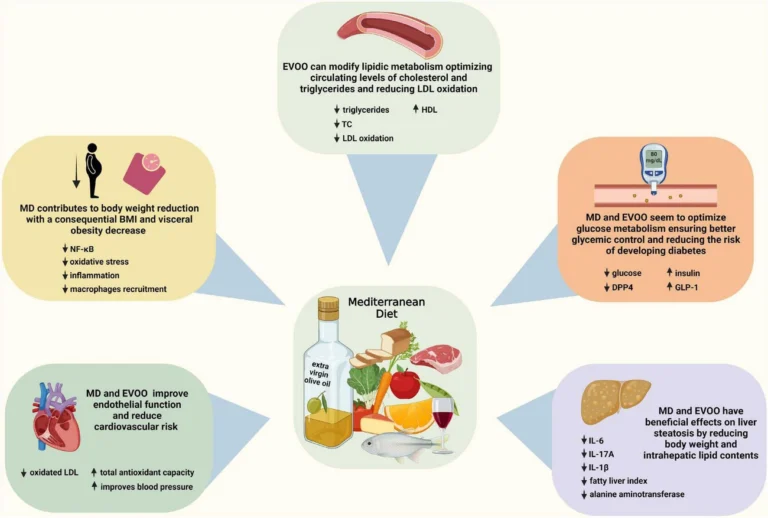
Extra virgin olive oil serves as the primary fat source in any authentic list of foods for mediterranean diet. The production method sets it apart from refined alternatives. EVOO comes directly from olives through mechanical extraction, crushing and pressing the fruit without heat or chemical processing. Refined olive oil, by contrast, undergoes chemical extraction that eliminates most minor components.
What Makes It Essential
The composition of EVOO makes it nutritionally superior. Oleic acid, a monounsaturated fatty acid, represents 70-80% of the total fat content. This specific MUFA profile reduces cardiovascular disease risk, neurodegenerative conditions, and certain cancers. While the glyceric fraction makes up 99% of EVOO’s composition, the remaining fraction contains the real nutritional powerhouses.
Polyphenols concentration ranges from 50 to 800 mg/kg in quality extra virgin olive oil. These compounds include oleuropein, hydroxytyrosol, and tyrosol, which provide oxidative stability and the characteristic bitterness and spiciness you taste. EVOO contains over 20 types of polyphenols that protect your heart and reduce inflammation throughout your body.
Key Health Benefits
Consuming between 20 and 30 grams of olive oil daily shows the strongest association with reduced cardiovascular disease and stroke risk. A 28-year study revealed that people using more than half a tablespoon daily had a 19% lower risk of cardiovascular death, 17% lower cancer mortality, and 29% reduced risk from neurodegenerative diseases.
Oleocanthal, one of EVOO’s main antioxidants, functions similarly to ibuprofen in fighting inflammation. This compound reduces oxidative damage from free radicals, which drives cancer development. The oleic acid content helps lower LDL cholesterol while raising HDL levels, directly protecting against atherosclerosis and stroke.
The anti-inflammatory properties extend beyond cardiovascular protection. EVOO has demonstrated the ability to fight eight strains of Helicobacter pylori, the harmful bacterium causing stomach ulcers. Research confirms that olive oil retains substantial amounts of healthy compounds even when used for cooking, maintaining high antioxidant and polyphenol levels despite heat exposure.
How to Use It Daily
Registered dietitians recommend 1 to 4 tablespoons of EVOO per day, though your optimal amount depends on age, weight, and activity level. Replace saturated fats like butter, margarine, or mayonnaise with equivalent amounts of olive oil to gain maximum benefits.
Drizzle EVOO on salads instead of commercial dressings, add it to cooked vegetables or pasta, sauté proteins in it rather than butter, or use it as a dip for whole grain bread. Research from Spain shows that sautéing vegetables in olive oil increases phenolic compounds compared to boiling, enhancing the nutritional value of raw foods. The smoke point ranges between 374°F and 450°F, making it suitable for most home cooking methods.
You can substitute olive oil for butter in baking recipes using a ratio of 1/4 cup plus 1 tablespoon of oil for every 1/2 cup of butter. This swap reduces saturated fat while adding heart-healthy fats to baked goods.
Buying and Storage Tips
Look for bottles bearing seals from the International Olive Council or North American Olive Oil Association, which verify purity and quality standards. Choose dark glass bottles or tins since light degrades EVOO rapidly. A harvest date provides better freshness information than best-by dates alone.
Store your bottle in a cool, dark cupboard away from the stove. The optimal temperature sits between 57°F and 64°F. Heat, light, oxygen, and time are EVOO’s four enemies. Never leave bottles near windows or use open pourers, as oxygen exposure accelerates degradation.
Unopened bottles last 18 to 24 months. Once opened, use the oil within 30 to 60 days for peak flavor and nutritional value. Buy only what you’ll consume in two months to ensure freshness. If your oil tastes sour, dry, or resembles Play-Doh, it has oxidized and lost its beneficial properties.
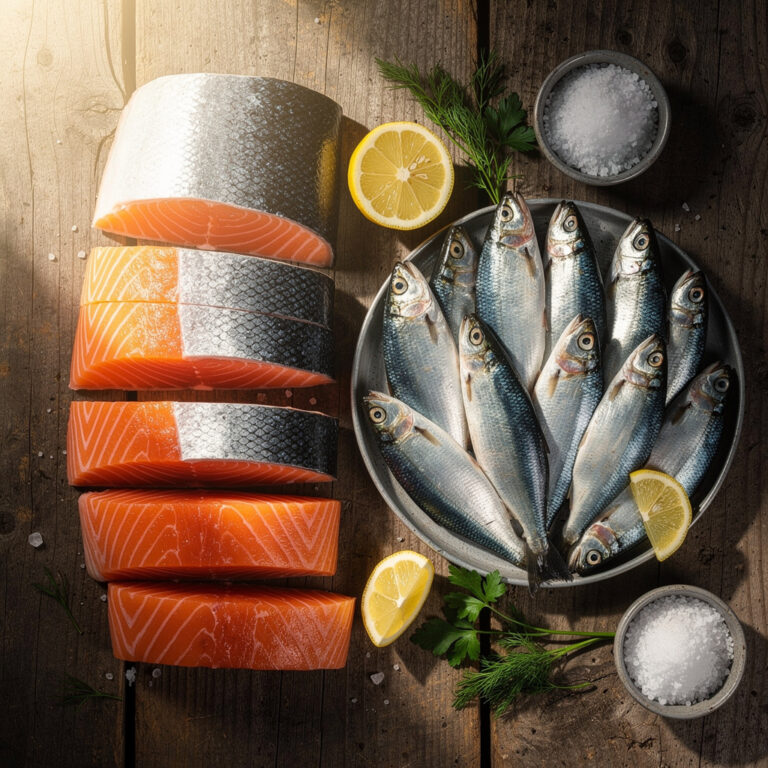
Fatty fish anchor the protein sources on any comprehensive list of foods for mediterranean diet. Cold-water varieties like salmon, mackerel, tuna, herring, and sardines contain high amounts of long-chain omega-3 fatty acids, whereas lower-fat fish such as bass, tilapia, and cod provide significantly less.
What Makes It Essential
The omega-3 content varies dramatically between fish types. Salmon provides approximately 1,500 to 2,200 milligrams of omega-3s per 3 to 4-ounce serving. A 3-ounce serving of farmed Atlantic salmon contains 1.7 grams of DHA and EPA combined, while wild Atlantic salmon provides 1.2 grams. Sardines deliver a little over 800 milligrams per 3-ounce serving.
These omega-3 fatty acids come in two primary forms: docosahexaenoic acid (DHA) and eicosapentaenoic acid (EPA). Your brain is made up of about 60% fat, with DHA comprising 15-20% of the brain’s overall fatty acid composition. Most children and adults in the United States consume recommended amounts of omega-3s as ALA, but consumption of DHA and EPA from foods contributes only about 40 milligrams in children and teens and about 90 milligrams in adults.
A 3-ounce serving of cooked Atlantic salmon contains 155 calories, 22 grams of protein, and 7 grams of total fat with only 1 gram of saturated fat. Sardines pack 177 calories, 21 grams of protein, and 10 grams of total fat per 3-ounce serving. One standout benefit of sardines is their calcium content. Because you eat them with the bones, a single serving can significantly increase your calcium intake, supporting bone health.
Key Health Benefits
Omega-3 fatty acids provide extensive cardiovascular protection. They help lower triglyceride levels, which directly reduces your risk of atherosclerosis, heart disease, and stroke. In addition to lowering triglycerides, omega-3s may raise your HDL (good) cholesterol and lower your blood pressure.
Research shows omega-3s may lower your risk for cardiovascular disease, death if you have CVD, sudden death caused by abnormal heart rhythm, and blood clots. Beyond heart health, these fatty acids may help lower your risk of developing some forms of cancer including breast cancer, Alzheimer’s disease and dementia, and age-related macular degeneration.
Brain health benefits extend to structure and function. A study of 2,183 dementia-free and stroke-free participants found that higher omega-3 index was associated with larger hippocampal volumes. The hippocampus plays a major role in learning and memory. Consuming more omega-3s was also associated with better abstract reasoning, or the ability to understand complex concepts using logical thinking.
Research on 1,623 people aged 65 and older without dementia or stroke revealed that among people who ate no fish, 31% had markers of severe underlying vascular brain disease, compared to 23% of those who ate three servings a week, and 18% of those who ate four or more servings of fish per week. For younger people between the ages of 65 and 69 years, consuming fish two or three times a week was roughly equivalent, in the opposite direction, to the effect of having high blood pressure.
Salmon serves as a natural source of vitamin D, a nutrient many people don’t get enough of. This fat-soluble vitamin plays a key role in calcium regulation and bone health while supporting muscle, immune, nervous and cardiovascular function. Wild-caught salmon also contains astaxanthin, an antioxidant that gives the fish its signature color and has anti-inflammatory properties.
How to Use It Daily
The Mediterranean diet encourages consuming fatty fish at least two or three times per week. The American Heart Association recommends people without a history of heart disease eat at least two servings of fish per week, totaling 6 to 8 ounces. If you have heart disease or high triglyceride levels, you may benefit from consuming even more omega-3 fatty acids.
For salmon, choose wild Alaskan varieties such as Sockeye and Coho, or U.S. farm-raised Atlantic salmon. Sardines are available in canned form, making them a shelf-stable protein you can pull out of the pantry anytime for quick-fix meals. Mash sardines onto whole wheat toast or crackers with mustard, add fresh grilled sardines to salads, or cook them with tomato sauce and vegetables. Toss them into pasta with olive oil, garlic, lemon, capers, and Parmesan, or build a rice bowl with pickled red onions, avocado, and kimchi.
Buying and Storage Tips
Fish quality depends on proper storage. The best way to enjoy fish is to eat it immediately after buying it. Fish will noticeably degrade after spending a night at 38°F, which is about the temperature that most home refrigerators maintain.
By laying your fish filets or cleaned whole fish on top of ice, you can decrease the temperature to about 32°F, which will help keep fish fresh for up to two or three days. Rinse the fish filets and dry them thoroughly with paper towels, then place them in a single layer in a zip-top bag. Press out all the air, lay the bag on top of a plate or tray lined with ice or ice packs, and set more ice or ice packs on top of the zip-top bag. Keep fish flesh dry since bacteria responsible for fish spoilage thrive in moisture.
Canned sardines provide convenience without immediate storage concerns. Because sardines are low on the food chain, they accumulate very little mercury. Both wild and farmed salmon are relatively low in mercury.
Whole grains provide sustenance and comfort as a main feature of the Mediterranean diet, emphasizing whole, mostly plant-based foods. Quinoa and farro stand out as nutrient-dense options that deliver fiber, protein, and essential minerals your body needs daily.
What Makes It Essential
Whole grains differ from refined grains by containing all three parts of a grain kernel: the starchy endosperm providing carbohydrates, protein and some B vitamins and minerals; the germ rich in healthy fats and vitamins; and the bran, a concentrated source of fiber, minerals and B vitamins. When you eat whole grains, the fiber and healthy fats slow digestion, resulting in smaller spikes and dips in blood sugar.
Quinoa functions as a pseudocereal grain, naturally gluten-free and packed with nutrients like protein, zinc, fiber, folate, and antioxidants. One cup of cooked quinoa contains 222 calories, 8 grams of protein, 5 grams of fiber, and serves as a good source of folate, magnesium, zinc, and iron. Quinoa contains all nine essential amino acids your body needs, making it one of the few plant-based complete proteins.
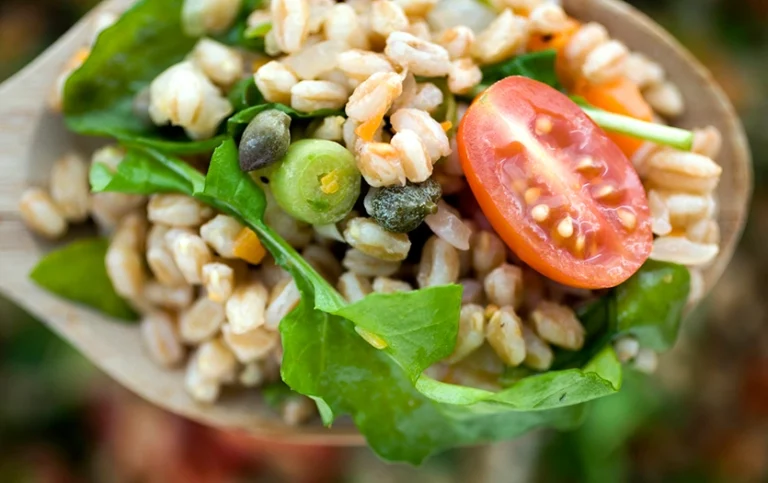
Farro is an ancient grain with a mildly nutty flavor available in three varieties: spelt, emmer, and einkorn, with emmer being the most commonly cooked. One serving provides about 200 calories, 7 grams of protein and 7 grams of fiber. Farro’s texture resembles rice, soft and chewy, but with double the fiber, protein, and nutrients.
Key Health Benefits
Fiber reduces blood cholesterol levels, supports a healthy gut and lowers the risk of developing colorectal cancer, cardiovascular disease and Type 2 diabetes. The fiber content in farro improves digestive health and can improve satiety that may lead to less weight gain or even some weight loss.
Quinoa contains two flavonoid plant compounds, quercetin and kaempferol, which have anti-inflammatory qualities and act as antioxidants in your body, protecting cells from damage caused by unstable molecules called free radicals. Studies show that eating more quinoa helped lower the risk of diabetes in older people who had prediabetes.
People with higher amounts of magnesium in their diets may have a lower risk of developing Type 2 diabetes, and quinoa provides significant magnesium content. Research shows that people who eat the highest amounts of fiber have a lower risk of colon cancer. Fiber moves food waste through your colon more quickly, preventing harmful substances that could lead to cell damage from taking hold.
How to Use It Daily
The Mediterranean Diet encourages 3 to 6 servings per day of whole grains and starchy vegetables. Choose oats, barley, quinoa or brown rice, and select whole-grain or whole-wheat versions of bread, cereal, couscous and pasta.
Cook quinoa using a one-to-two ratio: for every cup of quinoa, use 2 cups of water. Rinse 1 cup of quinoa thoroughly, add to 2 cups of water with a dash of salt, boil for 15-20 minutes until it absorbs the water and gets a fluffy look. Farro cooks using a one-to-three ratio, taking 15 to 30 minutes depending on the type. Rinse farro and place in a pot with enough liquid to cover, then simmer for 25-30 minutes until soft but still has a bit of a bite.
Add quinoa, barley, sorghum or farro to your usual chicken or vegetable soup, using one-half to 3/4 cup of raw grain for a pot of soup. Create whole grain salads with nuts, herbs, and dried fruit to keep in the refrigerator for up to 4 days. Toast quinoa to make a crunchy topping for salads, or toss it with feta, olives, and summer vegetables.
Buying and Storage Tips
Buy grains that are well packaged and sealed tightly, checking the expiration or sell-by date and choosing the newest one. Grains should look and smell faintly sweet or have no aroma at all; if you detect a musty or oily scent, the grains have passed their peak.
Store whole grains in airtight containers with tight-fitting lids. Glass, plastic, and aluminum canisters or zip-top plastic bags work successfully as long as they are airtight. Mark the purchase dates on your whole grains to track their freshness.
Intact whole grains like quinoa keep for 4 months in the pantry or 8 months in the freezer. Farro lasts 6 months in the pantry or 1 year in the freezer. Cooked quinoa should be kept in a refrigerator or freezer and should not sit at room temperature for longer than 2 hours. Store grains in a cool, dry pantry shelf, and for extended shelf life, place them in the freezer in a freezer-safe container.



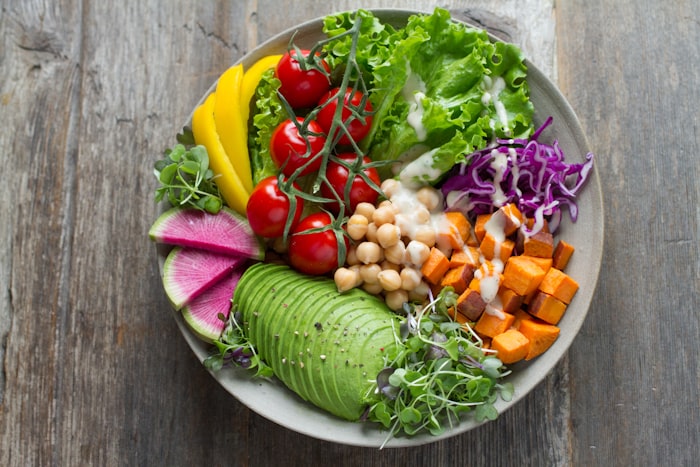
 Your mediterranean diet food list might be the key to living longer. Research shows that people who consumed more olive oil had a 15% lower risk of cardiovascular disease and were 17% less likely to die from any cause. In fact, two of the world’s five Blue Zones, where people live the longest, are Mediterranean regions. The Mediterranean diet is linked to lower blood pressure, cholesterol levels, and reduced risk of heart attack and stroke. This list of foods for mediterranean diet essentials covers seven staples you can add to your kitchen today.